
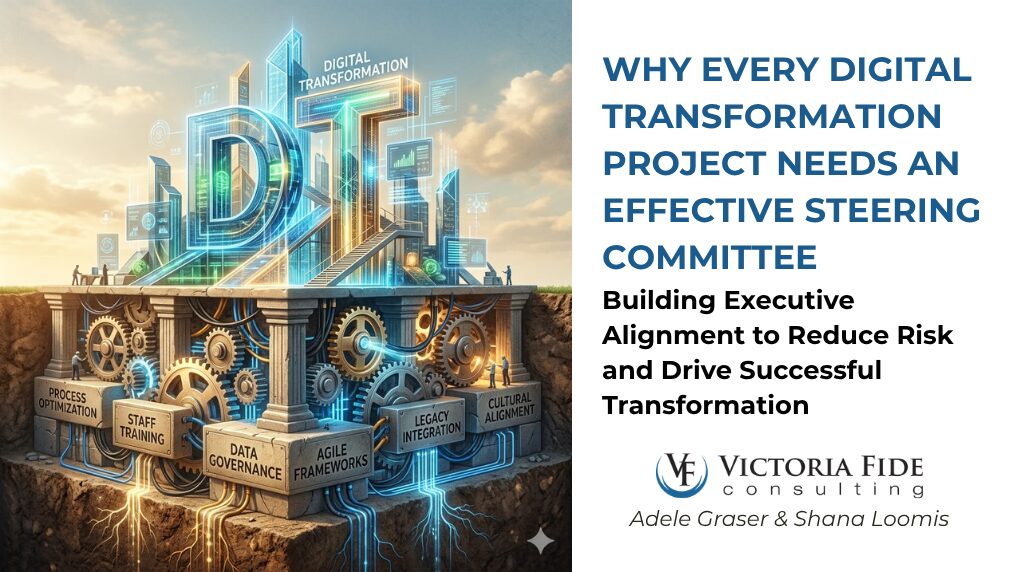
Why Every Digital Transformation Project Needs an Effective Steering Committee
Building Executive Alignment to Reduce Risk and Drive Successful Transformation
Why Steering Committees Matter More Than Ever
Digital transformation initiatives continue to reshape how organizations operate, compete, and grow. Whether implementing a new ERP system, modernizing business processes, migrating data, or adopting emerging technologies, these initiatives often represent some of the largest strategic investments an organization will make.
Yet despite the investment, many transformation projects fail to achieve their intended business outcomes. The reasons are rarely tied to technology alone. Instead, organizations often struggle because they begin implementation without strong executive alignment, clearly defined governance, or a structured decision-making process. As priorities shift, stakeholders disagree, and operational challenges emerge, projects lose momentum and become increasingly difficult to manage.
One of the most effective ways to reduce implementation risk is by establishing an engaged, well-equipped steering committee before implementation begins. An effective steering committee provides executive oversight, aligns business priorities, removes organizational roadblocks, and ensures that every major decision continues supporting the organization’s long-term business objectives. Rather than reacting to challenges after implementation begins, organizations with strong steering committees proactively identify risks, resolve issues quickly, and keep transformation initiatives focused on delivering measurable business value.
In this article, we’ll explore how to build an effective steering committee, define its responsibilities, and explain why executive governance has become one of the strongest predictors of successful digital transformation initiatives.
What Is a Digital Transformation Steering Committee?
A steering committee is a group of executive leaders and key business stakeholders responsible for providing strategic oversight throughout a digital transformation initiative. While project teams manage day-to-day execution, the steering committee ensures the initiative remains aligned with organizational priorities, business objectives, and long-term strategy.
An effective steering committee helps organizations:
- Align executive leadership around shared business goals
- Provide strategic direction throughout implementation
- Remove organizational roadblocks
- Prioritize competing business needs
- Resolve cross-functional conflicts
- Monitor project health and organizational readiness
- Reduce implementation risk through proactive decision-making
Simply put, the steering committee serves as the bridge between executive leadership and project execution. Without this level of governance, organizations often struggle to maintain alignment as projects become more complex.
Why Many Transformation Projects Struggle Without Executive Governance
Many organizations recognize the need for a steering committee only after implementation challenges begin to emerge. Unfortunately, by this point the project is already reacting to problems rather than preventing them.
Common challenges include:
- Unclear project ownership
- Conflicting business priorities
- Scope changes
- Delayed decisions
- Limited executive engagement
- Poor communication between departments
- Misaligned business requirements
- Low organizational adoption
These issues rarely happen overnight. More often, they develop because executive governance wasn’t established early enough. Without clear leadership, transformation initiatives often become fragmented as departments make independent decisions that no longer support the overall business strategy. The result is increased project complexity, reduced stakeholder confidence, and greater implementation risk.
Strong governance helps prevent these issues by creating a structured decision-making framework before implementation begins.
Building an Effective Steering Committee
Building a successful steering committee requires more than selecting senior leaders. It requires assembling a group of individuals who can provide strategic guidance while representing the broader needs of the organization.
The ideal committee size depends on the scope and complexity of the initiative. For smaller organizations, a committee of three to five members may be appropriate. For enterprise-wide ERP or digital transformation initiatives, committees of eight to twelve members often provide the right balance of expertise while maintaining efficient decision-making.
Regardless of size, every steering committee should include individuals who possess:
- Decision-making authority
- Strategic business perspective
- Cross-functional influence
- Organizational credibility
- Commitment to the project’s success
- Willingness to champion organizational change
Beyond executive leadership, organizations should also ensure the committee includes representation from individuals with operational knowledge of the project and, when appropriate, experienced transformation advisors who can provide objective guidance and industry best practices. This combination of executive leadership and operational expertise creates stronger governance while improving the quality of strategic decisions.
Equipping Your Steering Committee for Success
Establishing a steering committee is only the first step. For the committee to be effective, every member must clearly understand both the organization’s transformation objectives and their individual responsibilities throughout the project.
The first responsibility of the committee should be reviewing and validating the project’s business objectives. Every executive should understand:
- Why the transformation is being undertaken
- What business outcomes define success
- How progress will be measured
- Which organizational priorities take precedence when difficult decisions arise
This alignment becomes the foundation for every future decision made throughout the implementation.
Once business objectives have been confirmed, steering committee members should understand their ongoing responsibilities, including:
- Providing executive oversight
- Supporting business process owners
- Resolving cross-functional conflicts
- Removing organizational roadblocks
- Reviewing implementation risks
- Monitoring project performance
- Supporting organizational change management
- Approving major project decisions
- Determining implementation readiness at key milestones
Organizations should also invest in educating steering committee members on the implementation methodology, governance structure, project reporting, and available performance metrics. The more informed the committee becomes, the more effectively it can guide the organization through complex transformation decisions.

Why Steering Committees Matter Before Implementation Begins
One of the biggest misconceptions organizations have is that steering committees become important once implementation is underway. In reality, their greatest value often comes long before the project officially begins.
During the planning phase, executive leaders establish the strategic direction that will guide every decision throughout the transformation. Without alignment at this stage, even the best implementation methodology can struggle to deliver the expected business outcomes.
An engaged steering committee helps organizations:
- Validate business objectives before implementation begins
- Align executive stakeholders around shared priorities
- Confirm project scope and success criteria
- Prioritize business requirements
- Establish governance and decision-making authority
- Identify organizational risks early
- Remove barriers before they impact execution
When these conversations happen early, organizations significantly reduce the likelihood of costly scope changes, delayed decisions, conflicting priorities, and organizational resistance later in the project. Perhaps more importantly, steering committees help ensure technology decisions are driven by business objectives, not the other way around.
The most successful digital transformation initiatives don’t begin with selecting software. They begin with aligning leadership.
Leading Effective Steering Committee Meetings
Even the strongest steering committee can lose effectiveness if meetings become routine status updates rather than opportunities for strategic decision-making. An effective steering committee meeting should focus on removing barriers, managing risk, and making timely business decisions. While every organization will have different needs, most meetings should cover several key areas.
Project Health Overview
Begin with a concise executive summary of the project’s overall health. Rather than reviewing every project activity, leadership should receive a high-level view of:
- Timeline performance
- Budget status
- Scope changes
- Key milestones
- Overall project health
- Business objective alignment
Many organizations find stoplight reporting particularly effective because it allows executives to quickly identify areas requiring additional attention.
Review Implementation Risks
One of the steering committee’s most important responsibilities is proactively managing implementation risk. Each meeting should include discussion around:
- New project risks
- Existing risk mitigation plans
- Emerging organizational concerns
- Business readiness
- Resource constraints
Risk discussions should always result in clear ownership and documented action items.
Address Active Issues
While risks represent potential future problems, issues require immediate action. The steering committee should work collaboratively to:
- Remove organizational roadblocks
- Resolve cross-functional conflicts
- Support project leadership
- Escalate critical decisions when necessary
Successful steering committees don’t simply monitor issues. They resolve them.
Make Strategic Business Decisions
Transformation initiatives inevitably require executive decisions throughout the project lifecycle. These may include:
- Business process changes
- Scope adjustments
- Organizational priorities
- Resource allocation
- Go/No-Go approvals
Business Process Owners (BPOs) should participate whenever decisions directly affect their operational areas. This ensures executive decisions are supported by operational expertise while maintaining organizational alignment.
Review Organizational Readiness
As implementation progresses, organizations should regularly evaluate readiness for upcoming milestones. Questions leadership should continuously ask include:
- Are teams prepared for the next phase?
- Have business requirements been validated?
- Is training progressing as planned?
- Are governance processes working effectively?
- Have newly identified risks been addressed?
Transformation success depends just as much on organizational readiness as technical readiness.
Strengthening Executive Governance with the DX Implementation Risk Assessment
Many organizations assume they are ready for implementation simply because a project has been approved and a steering committee has been established. Unfortunately, governance alone does not eliminate implementation risk. Organizations also need visibility into their operational readiness.
This is one of the reasons Victoria Fide developed the DX Implementation Risk Assessment. Rather than focusing solely on project planning, the assessment helps organizations evaluate their readiness before implementation begins by identifying risks that often remain hidden until much later in the project.
The assessment evaluates six critical areas that consistently influence implementation success:
- Leadership & Governance Readiness
- Project Management Effectiveness
- Business Requirements Alignment
- Data Management & Readiness
- Testing & Quality Assurance
- Team Support & Change Management
Together, these areas provide executive leadership with valuable insight into where additional preparation may be needed before major technology investments are made. For steering committees, this information becomes extremely valuable. Instead of reacting to issues during implementation, leadership gains an objective understanding of organizational strengths, potential risks, and opportunities for improvement before execution begins. The assessment helps steering committees focus their attention where it matters most.
Learn more about the DX Implementation Risk Assessment:
https://victoriafide.com/dx-implementation-risk-assessment/
Steering Committees as a Strategic Business Advantage
Many organizations view steering committees as a project requirement. High-performing organizations view them as a strategic advantage.
An engaged steering committee creates consistency in executive decision-making, improves organizational alignment, strengthens governance, and reinforces accountability throughout the transformation journey. Perhaps most importantly, it ensures every major decision continues supporting the organization’s broader business objectives.
Technology implementations eventually end. Business transformation continues. Organizations that establish strong executive governance build capabilities that extend well beyond a single project. Those capabilities improve future implementations, strengthen operational performance, and create a culture of continuous improvement.
For organizations pursuing digital transformation, an effective steering committee isn’t simply another governance structure. It is one of the strongest predictors of long-term success.
Next Steps
Before launching your next ERP implementation, digital transformation initiative, or operational modernization effort, take time to evaluate both your governance structure and your organizational readiness. Consider these steps:
- Establish an executive steering committee early in project planning.
- Align leadership around measurable business objectives.
- Clearly define governance, decision-making authority, and accountability.
- Validate business requirements before implementation begins.
- Evaluate organizational readiness using the Victoria Fide DX Implementation Risk Assessment.
- Continue monitoring implementation risks and organizational alignment throughout the project lifecycle.
Organizations that invest in governance before implementation consistently reduce risk, improve collaboration, and achieve stronger business outcomes.
Resources
Victoria Fide Consulting Resources
- DX Implementation Risk Assessment: Evaluate your organization’s readiness before launching a digital transformation, ERP implementation, or operational modernization initiative. The assessment helps identify implementation risks early and provides actionable recommendations to improve project success. https://victoriafide.com/dx-implementation-risk-assessment/
- ERP Implementation Recovery: https://victoriafide.com/our-services/erp-implementation-recovery/
- Business & Technology Optimization: https://victoriafide.com
Victoria Fide Blog Articles
- Digital Transformation Challenges: https://victoriafide.com/digital-transformation-challenges/
- Defining Your DX Project: Bridging the Gap Between Strategy and Execution: https://victoriafide.com/blog/defining-your-dx-project-bridging-the-gap-between-strategy-and-execution/
- What It Takes to Succeed in Digital Transformation: https://victoriafide.com/what-it-takes-to-succeed-in-digital-transformation/
Victoria Fide Thought Leadership
- Adele Graser – Original Article & Executive Leadership: This article is based on the original thought leadership and content developed by Adele Graser. Her perspective on executive governance, stakeholder alignment, and steering committee effectiveness continues to provide organizations with practical guidance for leading successful digital transformation and ERP initiatives.
- Tory Bjorklund – Executive Leadership in Digital Transformation: This article is inspired by Tory Bjorklund’s execution-first approach to digital transformation, emphasizing that successful initiatives begin with strong executive leadership, governance, operational alignment, and organizational readiness. His perspective reinforces that technology alone does not determine project success. Long-term value is created when leaders align business strategy, people, processes, and technology before implementation begins.
- Explore more insights from Victoria Fide: https://victoriafide.com
Industry Resources
- Project Management Institute (PMI): https://www.pmi.org
- Gartner – Digital Transformation & Executive Leadership: https://www.gartner.com/en/insights
- McKinsey & Company – Digital Transformation: https://www.mckinsey.com
- Microsoft – Business Transformation: https://www.microsoft.com/industry/blog/