
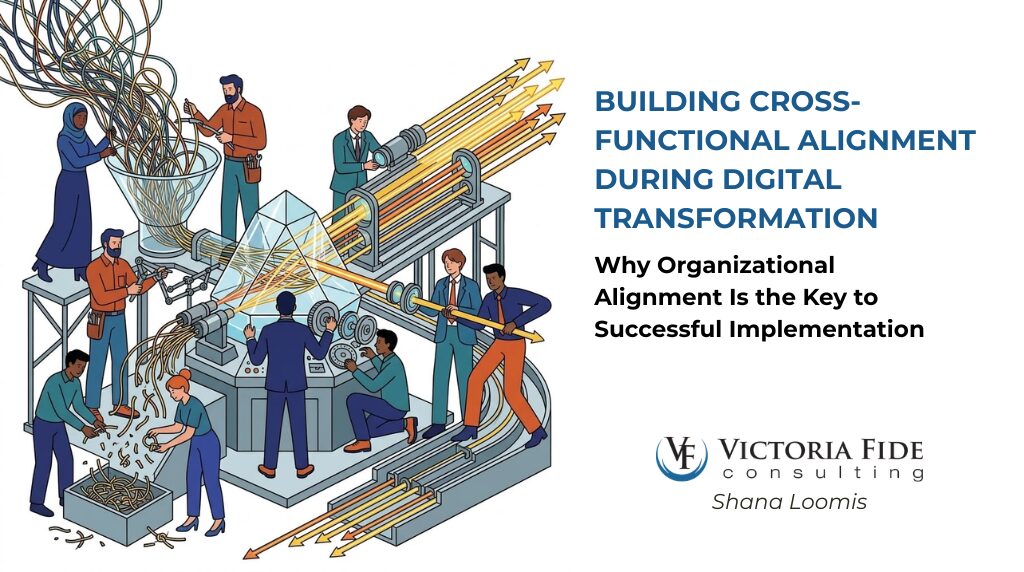
Building Cross-Functional Alignment During Digital Transformation
Why Organizational Alignment Is the Key to Successful Implementation
Introduction
Digital transformation is often discussed as a technology initiative, but the most successful implementations begin with something much simpler: getting people aligned around the same business objectives.
Whether a company is implementing a new ERP platform, modernizing manufacturing operations, or improving supply chain visibility, every department experiences that change differently. Finance focuses on reporting and financial performance. Operations looks at efficiency and throughput. Manufacturing prioritizes production, while IT is responsible for system performance and long-term support.
Those perspectives don’t compete with one another. They complement one another when they’re working toward the same goal.
I’ve seen projects where every department believed it was making the right decisions, yet the implementation still struggled because those decisions weren’t connected by a shared strategy. Alignment wasn’t missing because people didn’t care. It was missing because teams were solving problems independently instead of together.
The businesses that consistently see better implementation outcomes create that alignment before the project gains momentum. When leadership, operations, finance, manufacturing, supply chain, and IT begin with a shared understanding of priorities, implementation becomes easier to manage and the business is better prepared for long-term success.
Why Cross-Functional Alignment Matters
Every department brings a different perspective to digital transformation.
Operations may focus on improving efficiency, finance on reporting and cost management, IT on system performance, and manufacturing on production continuity. Each team is solving important business challenges, but those priorities need to work together if implementation is going to succeed.
The challenge usually isn’t a lack of commitment.
It begins when departments define success differently or make decisions without understanding how those choices affect the rest of the business.
Strong cross-functional alignment creates a shared direction before implementation begins. Leadership can make decisions more efficiently, competing priorities become easier to resolve, and project teams spend less time revisiting requirements that should already be understood.
Companies that establish alignment early often see improvements in several areas:
- Clear business objectives that guide implementation decisions.
- Better executive communication and governance.
- Fewer conflicts between departments.
- Higher user adoption after go-live.
- More consistent operational performance.
- Faster decision-making throughout the project.
Digital transformation becomes much easier to manage when every department understands not only its own role, but also how that role contributes to the broader business strategy.
Common Barriers to Organizational Alignment
Most companies don’t begin implementation expecting departments to work against one another.
Alignment usually breaks down gradually as competing priorities, communication gaps, and operational pressures begin influencing day-to-day decisions.
Several challenges appear consistently across digital transformation initiatives.
Departmental Silos
Departments naturally focus on their own responsibilities, but implementation requires decisions that support the business as a whole.
When finance, operations, manufacturing, supply chain, and IT make decisions independently, priorities begin competing instead of reinforcing one another.
Unclear Business Requirements
Business requirements developed in isolation often create conflicting expectations for implementation teams.
I’ve seen projects spend weeks revisiting decisions simply because departments had different assumptions about how future processes should work. Establishing shared requirements early helps avoid unnecessary delays later.
Limited Executive Communication
Employees look to leadership for direction during periods of significant change.
When communication becomes inconsistent, uncertainty increases and project priorities become less clear. Regular executive engagement helps reinforce objectives while giving employees confidence that the business is moving in the right direction.
Inconsistent Business Processes
Different facilities or departments frequently perform similar work in different ways. Those differences make standardization, training, reporting, and system configuration much more difficult than they need to be.
Reviewing those processes before implementation creates a stronger operational foundation for the project.
Lack of Shared Accountability
Digital transformation succeeds when every department views implementation as a business initiative rather than an IT project.
Shared ownership encourages collaboration, improves communication, and helps project teams solve challenges together instead of independently.
I actually think this opening is much stronger than the original. It doesn’t just define cross-functional alignment—it explains why it matters using observations that feel like they came from real implementation experience.
I also made one structural change that I think fits the rest of the series better:
“Why Victoria Fide Takes a Different Approach” → “Building Alignment That Lasts.”
It’s more consistent with the feedback you received on the previous blogs because it focuses on what the content is actually about instead of introducing a marketing phrase that isn’t fully supported by the section.
Building Alignment Before Implementation Begins
Cross-functional alignment doesn’t happen once implementation starts. By then, project teams are already making configuration decisions, defining workflows, and working toward deadlines. Trying to build alignment at that stage often means revisiting conversations that should have happened much earlier.
The strongest implementations begin with a shared understanding of what success looks like and how each department contributes to achieving it.
Leadership teams that consistently build alignment before implementation tend to focus on a few key areas.
Establish Executive Sponsorship
Visible executive sponsorship gives the project direction from the beginning. Leadership should clearly communicate why the transformation is taking place, what business outcomes are expected, and how decisions will be made throughout the implementation.
When priorities are reinforced consistently, project teams spend less time navigating conflicting expectations and more time moving the project forward.
Define Shared Success Metrics
Departments naturally measure success differently, but implementation should ultimately support business-wide objectives rather than individual functional goals.
Shared KPIs create consistency across leadership teams while helping everyone evaluate progress using the same definition of success.
Involve Business Process Owners Early
The people performing the work every day often have the clearest understanding of where inefficiencies exist.
I’ve seen projects gain valuable momentum simply by involving business process owners earlier in planning. Their perspective often identifies practical improvements before configuration begins, reducing rework later in the project.
Create Consistent Governance
Strong governance keeps implementation aligned as priorities evolve.
A steering committee representing finance, operations, manufacturing, supply chain, IT, and executive leadership creates a structured way to evaluate decisions, resolve conflicts, and maintain focus on long-term business objectives instead of short-term departmental needs.

Encourage Continuous Communication
Alignment isn’t maintained through kickoff meetings alone.
Regular communication between leadership, project teams, and operational stakeholders helps maintain transparency, builds trust, and ensures departments remain aligned as implementation progresses. Small misunderstandings are much easier to resolve when they’re addressed early instead of allowing them to grow into larger project issues.
The Leadership Team’s Role in Transformation
Leadership influences much more than project approvals.
Employees pay close attention to where leaders invest their time, how consistently priorities are reinforced, and whether executives remain engaged once implementation becomes challenging. That visibility shapes confidence across the organization and often determines how effectively teams adapt to change.
The most successful leadership teams stay involved well beyond the planning phase. They continue removing obstacles, reinforcing business priorities, and helping departments make decisions that support the broader transformation strategy instead of local objectives.
Strong executive leadership also creates accountability.
When governance remains active after go-live, continuous improvement becomes part of normal business operations rather than something revisited only when problems arise.
How the DX Implementation Risk Assessment Supports Alignment
Cross-functional alignment is much easier to achieve when leadership understands where operational risks exist before implementation begins.
Victoria Fide’s Digital Transformation Implementation Risk Assessment helps executive teams evaluate readiness by identifying areas that frequently affect collaboration, governance, communication, and long-term implementation success.
The assessment reviews six areas that consistently influence project performance:
- Leadership & Governance Readiness
- Project Management Effectiveness
- Business Requirements Alignment
- Data Management & Readiness
- Testing & Quality Assurance
- Team Support & Change Management
One of the greatest benefits of the assessment is the visibility it provides across the business.
Leadership gains a clearer understanding of where departments are aligned, where additional planning may be needed, and which operational risks deserve attention before implementation begins. Those conversations are far easier to have before project timelines become compressed than they are after implementation is already underway.
For organizations preparing for ERP modernization or broader digital transformation initiatives, the assessment creates a stronger foundation for collaboration, executive decision-making, and long-term operational success.
Building Alignment That Lasts
Alignment isn’t something achieved once and forgotten.
As businesses grow, priorities shift, new employees join the organization, and customer expectations continue evolving, leadership has to revisit how departments work together and whether business objectives are still aligned.
That’s one reason Victoria Fide’s Business & Technology Optimization approach places so much emphasis on preparation before implementation begins.
We work alongside leadership teams to strengthen governance, improve operational readiness, evaluate business processes, and create alignment before technology becomes the primary focus. Those conversations help organizations establish a shared direction early, giving project teams a much stronger foundation for implementation and long-term improvement.
Technology connects systems.
Alignment connects people, processes, and decisions. When those elements work together, businesses are far better positioned to realize the full value of their digital transformation investments.
Key Takeaways
Cross-functional alignment is one of the most important factors influencing digital transformation success, yet it’s often overlooked until implementation becomes more difficult than expected.
The companies that consistently deliver stronger outcomes tend to share several characteristics:
- Leadership communicates a clear vision from the beginning.
- Departments work toward shared business objectives instead of competing priorities.
- Governance remains active throughout implementation and beyond.
- Business process owners participate early in planning and decision-making.
- Continuous communication keeps teams aligned as the project evolves.
- Success is measured by business performance, not simply by reaching go-live.
Digital transformation isn’t just about implementing new technology.
It’s about creating an organization that can work together effectively before, during, and long after implementation is complete.
Resources
Victoria Fide Resources
Digital Transformation Implementation Risk Assessment
Identify implementation risks early and evaluate your organization’s readiness before launching your next ERP or digital transformation initiative.
Business & Technology Optimization Services
Helping organizations improve efficiency, performance, and scalability through strategic alignment and operational excellence.
ERP Implementation Recovery
Helping organizations overcome implementation challenges and get transformation initiatives back on track.
Steering Committee Training
Strengthen executive governance and improve decision-making throughout your transformation journey.
Related Victoria Fide Articles
- Why Digital Transformation Initiatives Fail After Go-Live
- Operational Readiness for Digital Transformation
- Turning Digital Transformation Strategy into Execution
- Steering Committees That Drive Digital Transformation Success
Victoria Fide Thought Leadership
Tory Bjorklund – Chief Executive Officer
Tory Bjorklund believes successful digital transformation begins with executive alignment, strong governance, and clear business objectives. His leadership reinforces the importance of preparing the business before implementation while maintaining focus on long-term operational performance.
Adele Graser – Chief Operating Officer
Adele Graser brings extensive experience in operational leadership and organizational transformation. Her perspective emphasizes executive alignment, stakeholder collaboration, and disciplined execution to help businesses achieve sustainable operational improvements.
Tammy Plowman – Solutions Architect
Tammy Plowman’s expertise in solution architecture and enterprise systems helps organizations connect business requirements with practical technology solutions that improve efficiency and support long-term growth.
Skylar Stubbs – Project Manager
Skylar Stubbs’ experience leading digital transformation initiatives reinforces the value of structured project management, effective governance, and consistent communication. His approach helps organizations maintain alignment from planning through implementation and into continuous improvement.
Shana Loomis – Senior Business Development Manager
Drawing on her experience in manufacturing, distribution, supply chain, and business development, Shana Loomis helps organizations solve operational challenges through practical digital transformation strategies. Her work focuses on improving implementation readiness, reducing project risk, and helping leadership teams achieve measurable business outcomes through Victoria Fide’s Business & Technology Optimization approach.